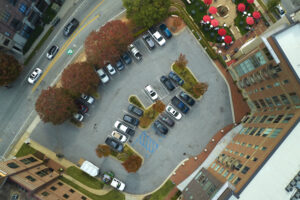

Transforming Commercial Parking into a Strategic Asset
For a modern commercial property—whether it is a high-rise office in the city a retail center, or a sprawling mixed-use development—parking is often the first and last point of contact for every tenant and visitor. Yet, for many property owners, this space remains a source of “invisible friction”: a landscape of unauthorized vehicles, permit disputes, and missed financial opportunities.
When managed with precision, however, the lot ceases to be a liability and becomes a strategic advantage. It evolves into a revenue driver, a tenant retention tool, and a model of operational efficiency.
The Hidden Costs of Traditional Management
Most commercial properties struggle with a common set of symptoms that quietly erode Net Operating Income (NOI). Inconsistent oversight often leads to visitor conflicts and long-term unauthorized parking, while limited visibility into actual usage makes it nearly impossible to identify where revenue is leaking.
These discrepancies often surface during internal audits of daily revenue reports, where the gap between transient parking activity and actual collection becomes clear. Without a modern data model, property owners are left managing an asset they cannot fully see.
The LPR Revolution: Precision Over Permits
The shift toward a “Zen” state of management begins with the elimination of physical friction. License Plate Recognition (LPR) technology replaces the outdated world of hang-tags, stickers, and manual checks.
The logic is simple yet transformative:
-
Automated Recognition: Cameras capture plates upon entry and exit, instantly matching them against active permits or paid sessions.
-
Frictionless Enforcement: Violations are identified and processed automatically, ensuring consistent application of rules without the need for aggressive manual intervention.
This technology, currently being implemented across major sites in Miami and beyond, provides real-time visibility into exactly how a lot is utilized at any given hour.
Monetizing the Empty Space
Commercial lots often hold “hidden revenue” that remains untapped. By transitioning to a smart platform, owners can create predictable income streams from spaces that would otherwise sit vacant:
-
After-Hours Public Access: Opening office parking to the public during evening hours or for local events.
-
Tiered Premium Spaces: Offering reserved spots for high-value tenants.
-
Dynamic Pricing: Implementing event-based or hourly rates for visitors.
The key to success here lies in the Revenue Share Logic. A transparent agreement ensures that the property owner and the management partner are aligned, with clearly defined remit percentages—typically around 50% of net revenue—and straightforward per-notice fees.
Legislative Intelligence & Human Support
Modern parking management is as much about legal precision as it is about technology. Navigating the evolving landscape of enforcement—such as the recent Maine legislative parking rules (LD 1794)—requires a partner who monitors legal determinations and ensures the site remains fully compliant.
Furthermore, the “human” side of the technology is what protects a property’s brand. A successful operation combines sophisticated software with dedicated support teams to handle customer disputes professionally, ensuring that enforcement never feels like a “gotcha” to a valued tenant.
The Bottom Line
Smart parking is no longer an optional upgrade; it is a competitive necessity. By integrating advanced infrastructure with a commitment to data integrity, property owners gain full control over their assets.
The result is a property that doesn’t just “have parking,” but a property that utilizes every square foot to enhance the user experience and drive the bottom line. It is time to turn your spaces into strategy.